


Practice Areas
Peebles Law Offices fights for plaintiffs: people who have been harmed from the misconduct or bad product of another person or company. The law firm focuses on people who were injured by another’s fault, people who are having disputes with their property insurer, and people who were wrongfully fired or suffered discrimination by their employer. Below are more detailed descriptions of these different areas.
In addition to these practice areas, we consider representing any person who has been unjustly harmed and needs our help.
For a free consultation, call the California Office at (415) 287-2686 or the Louisiana Office at (504) 291-8205, or click the email button to fill out and send a short form telling us about your case. Peebles Law Offices is here to help.

Personal Injury
Auto Accidents: Drivers, passengers, and pedestrians who were injured during a motor vehicle crash. This also can include single-vehicle accidents, bicycle accidents, and passengers in commercial vehicles that were operated dangerously causing injury to the passenger.
Trips and Slips: Pedestrians who were injured after suffering a fall caused by a poorly maintained or defective surface area, such as a street, sidewalk, or a walkway inside or outside a commercial establishment. To view a one-page publication from Verdict Search that describes the details of a trip and fall case that Scott brought to trial, click here.
Medical Malpractice/Birth Injury: Patients who underwent treatment from a doctor, nurse, or other medical provider, and became injured (or more injured) because of negligent medical treatment.
Small Airplane Crashes: Passengers in an aircraft who were injured due to a crash resulting from pilot error or a defective part of the aircraft.
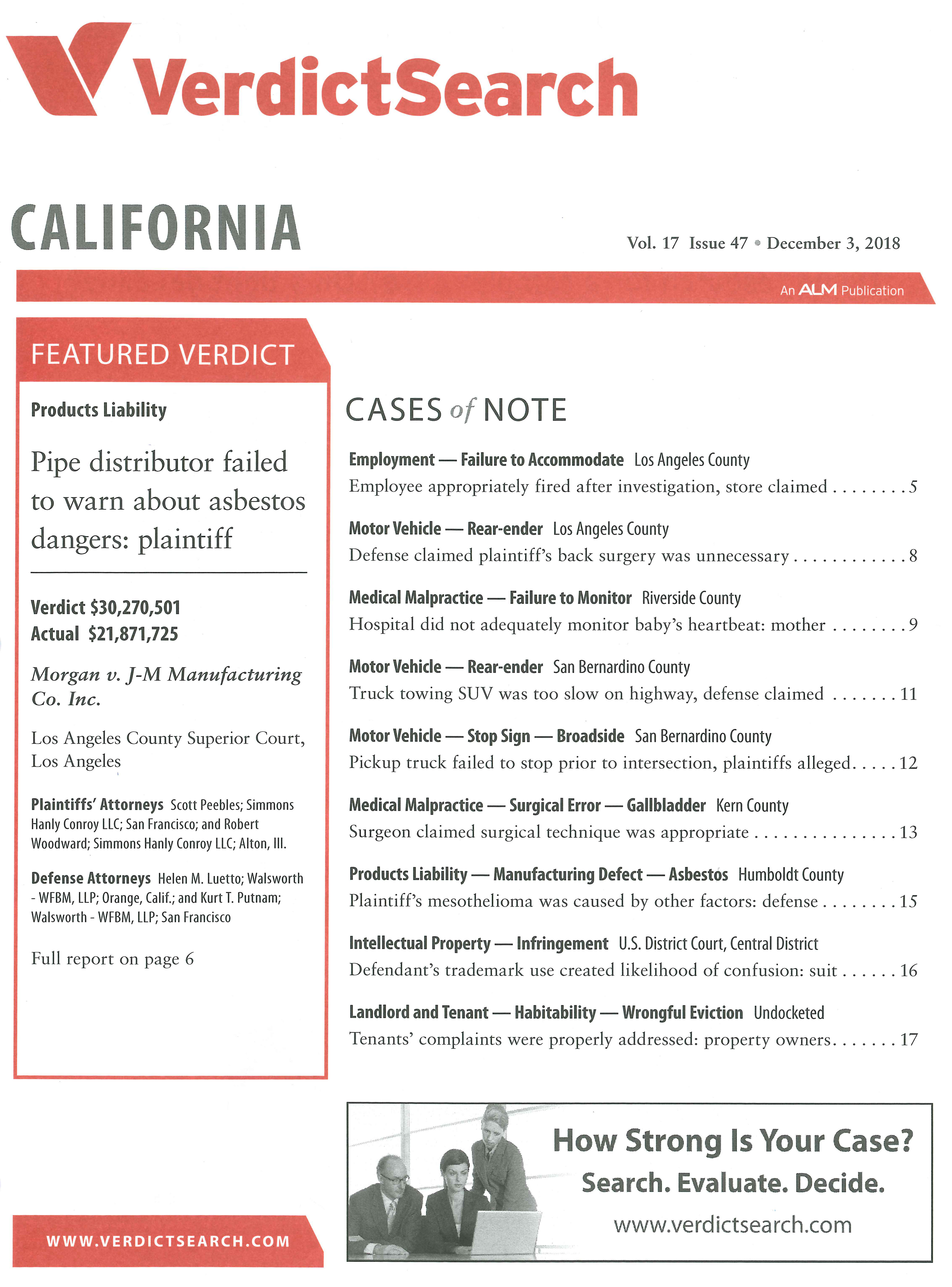
Product Defects: Users of a product that has a defect or dangerous condition which injured the user. Examples include a defective car part that causes the driver to crash, or a chair that was constructed wrongly and collapsed, injuring the person who tried to sit on it. To view a three-page publication from Verdict Search that describes the details of a product defect case that Scott brought to trial, click here.
Toxic Exposure: Victims exposed to toxic material that caused them injury. Examples include products that contain and release toxic asbestos fibers that cause the user of the product to develop a disease, or a chemical plant that pollutes the air which surrounding residents breathe in and suffer injury.
Power Explosions: Persons who were injured when the equipment from a power company exploded. An example is a pedestrian who walks by a power company’s transformer that explodes due to poor maintenance.
Traumatic Brain Injury: Persons who suffered brain damage, usually from an accident. Symptoms from the injury may be dramatic or very subtle, such as blurred vision, difficulty speaking, or trouble forming thoughts and keeping memories that previously were not a problem (or not as much of a problem).
Wrongful Death: Spouses, children, and family members of a person who died as a result of the misconduct or bad product of another person or company may be eligible to recover for the loss.

Property Insurance Disputes
Underpayment of Benefits: Property insurance companies routinely underpay the benefits that they owe to the home and business owners who pay their premiums, even though the benefits are owed under the terms of the insurance policy. Call Peebles Law Offices to learn what you are owed.
Pipe Bursts: When people insure their residence or business, many insurance policies will cover the damages from a sudden pipe burst that leaves water damage to the walls, floors, and other parts of the building, even if the policy will not pay to replace the pipe parts or plumbing system itself. This coverage might be available even when the pipes in an old system have deteriorated over time. Be careful before relying on your insurer to be fair or accurate about the coverage it provides through your insurance policy. Call Peebles Law Offices.
Windstorms/Hailstorms/Hurricanes: Insurance policies that cover wind, hail, and storm damage to a residence or business – including to the roof, siding, windows, and other building parts – often pay for damages that result from rain that enters the residence or business through an opening generated from the wind damage.
Wildfires/Building Fires: Insurance policies that cover damages from wildfires will often cover the living expenses that you, the insured, will incur while your home is repaired or rebuilt, though many insurers try to resist paying for this coverage.
Employment Discrimination & Wrongful Termination
Whistleblower: Employees may learn about or observe their employer’s illegal conduct, and often employees are also asked (or ordered) to participate in the illegal conduct. However, employees may fear the consequences of blowing the whistle (reporting) about the employer’s conduct to law enforcement, to a government or regulatory body, or even to a supervisor or higher manager who has authority to do something about the conduct. There is law that protects employees from blowing the whistle about illegal conduct at their workplace, including recovery the employee can make from being terminated or adversely treated by the employer for blowing the whistle.
Discrimination Based on Race/Ethnicity, Gender/Sex, and Age: An employer who adversely treats an employee because of race, ethnicity, gender, sex, or age is discriminating illegally. There is law that protects employees when they experience illegal discrimination from their employer, including compensation for the loss of reputation and the financial consequences that arise from their employer’s treatment.
Wrongfully Terminated From Work: Some employment agreements require an employer to show “good cause” before firing an employee. Other employment agreements permit an employer to fire an employee for no particular reason at all. However, under either kind of agreement, there remains several reasons for which an employer is prohibited from firing an employee, and these reasons are not usually openly expressed, such as because of an employee’s race, ethnicity, gender, sex, and sometimes age, or, because the employee blew the whistle on the employer’s illegal conduct. A wrongfully terminated employee may be eligible to recover from an employer for lost wages, damage to reputation, penalties, and other forms of recovery.
Practice Areas
Peebles Law Offices fights for plaintiffs: people who have been harmed from the misconduct or bad product of another person or company. The law firm focuses on people who were injured by another’s fault, people who are having disputes with their property insurer, and people who were wrongfully fired or suffered discrimination by their employer. Below are more detailed descriptions of these different areas.
In addition to these practice areas, we consider representing any person who has been unjustly harmed and needs our help.
For a free consultation, call the California Office at (415) 287-2686 or the Louisiana Office at (504) 291-8205, or click the email button to fill out and send a short form telling us about your case. Peebles Law Offices is here to help.
Personal Injury
Auto Accidents: Drivers, passengers, and pedestrians who were injured during a motor vehicle crash. This also can include single-vehicle accidents, bicycle accidents, and passengers in commercial vehicles that were operated dangerously causing injury to the passenger.
Trips and Slips: Pedestrians who were injured after suffering a fall caused by a poorly maintained or defective surface area, such as a street, sidewalk, or a walkway inside or outside a commercial establishment. To view a one-page publication from Verdict Search that describes the details of a trip and fall case that Scott brought to trial, click here.
Medical Malpractice/Birth Injury: Patients who underwent treatment from a doctor, nurse, or other medical provider, and became injured (or more injured) because of negligent medical treatment.
Small Airplane Crashes: Passengers in an aircraft who were injured due to a crash resulting from pilot error or a defective part of the aircraft.
Product Defects: Users of a product that has a defect or dangerous condition which injured the user. Examples include a defective car part that causes the driver to crash, or a chair that was constructed wrongly and collapsed, injuring the person who tried to sit on it. To view a three-page publication from Verdict Search that describes the details of a product defect case that Scott brought to trial, click here.
Toxic Exposure: Victims exposed to toxic material that caused them injury. Examples include products that contain and release toxic asbestos fibers that cause the user of the product to develop a disease, or a chemical plant that pollutes the air which surrounding residents breathe in and suffer injury.
Power Explosions: Persons who were injured when the equipment from a power company exploded. An example is a pedestrian who walks by a power company’s transformer that explodes due to poor maintenance.
Traumatic Brain Injury: Persons who suffered brain damage, usually from an accident. Symptoms from the injury may be dramatic or very subtle, such as blurred vision, difficulty speaking, or trouble forming thoughts and keeping memories that previously were not a problem (or not as much of a problem).
Wrongful Death: Spouses, children, and family members of a person who died as a result of the misconduct or bad product of another person or company may be eligible to recover for the loss.
Property Insurance Disputes
Underpayment of Benefits: Property insurance companies routinely underpay the benefits that they owe to the home and business owners who pay their premiums, even though the benefits are owed under the terms of the insurance policy. Call Peebles Law Offices to learn what you are owed.
Pipe Bursts: When people insure their residence or business, many insurance policies will cover the damages from a sudden pipe burst that leaves water damage to the walls, floors, and other parts of the building, even if the policy will not pay to replace the pipe parts or plumbing system itself. This coverage might be available even when the pipes in an old system have deteriorated over time. Be careful before relying on your insurer to be fair or accurate about the coverage it provides through your insurance policy. Call Peebles Law Offices.
Windstorms/Hailstorms/Hurricanes: Insurance policies that cover wind, hail, and storm damage to a residence or business – including to the roof, siding, windows, and other building parts – often pay for damages that result from rain that enters the residence or business through an opening generated from the wind damage.
Wildfires/Building Fires: Insurance policies that cover damages from wildfires will often cover the living expenses that you, the insured, will incur while your home is repaired or rebuilt, though many insurers try to resist paying for this coverage.
Employment Discrimination & Wrongful Termination
Whistleblower: Employees may learn about or observe their employer’s illegal conduct, and often employees are also asked (or ordered) to participate in the illegal conduct. However, employees may fear the consequences of blowing the whistle (reporting) about the employer’s conduct to law enforcement, to a government or regulatory body, or even to a supervisor or higher manager who has authority to do something about the conduct. There is law that protects employees from blowing the whistle about illegal conduct at their workplace, including recovery the employee can make from being terminated or adversely treated by the employer for blowing the whistle.
Discrimination Based on Race/Ethnicity, Gender/Sex, and Age: An employer who adversely treats an employee because of race, ethnicity, gender, sex, or age is discriminating illegally. There is law that protects employees when they experience illegal discrimination from their employer, including compensation for the loss of reputation and the financial consequences that arise from their employer’s treatment.
Wrongfully Terminated From Work: Some employment agreements require an employer to show “good cause” before firing an employee. Other employment agreements permit an employer to fire an employee for no particular reason at all. However, under either kind of agreement, there remains several reasons for which an employer is prohibited from firing an employee, and these reasons are not usually openly expressed, such as because of an employee’s race, ethnicity, gender, sex, and sometimes age, or, because the employee blew the whistle on the employer’s illegal conduct. A wrongfully terminated employee may be eligible to recover from an employer for lost wages, damage to reputation, penalties, and other forms of recovery.